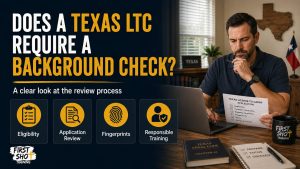

The cost of a Texas LTC is not one number. It is several smaller ones. This page breaks them down so you can budget honestly before you start the Online Texas LTC Class.
Some links on this page may be affiliate links. First Shot Training may receive compensation when you enroll through those links, at no additional cost to you.
Quick Answer: How Much Does It Cost to Get a Texas LTC
The standard Texas DPS application fee for an original LTC is currently $40. That is not the whole cost of getting licensed. Most applicants should also budget for the required training, the in-person proficiency portion, and fingerprinting. Range or equipment fees can add more. Some applicants qualify for reduced state fees under special conditions.
Table of Contents
Start With the State Fee
Texas DPS currently lists the standard original LTC application fee at $40. DPS also offers reduced fees or exemptions for some special conditions. Certain military categories and other qualifying applicants may pay less. If that could be you, read about the Texas LTC for military members and veterans. The state fee is separate from training and fingerprint expenses, and it covers an original license only, since renewing a Texas LTC later carries its own fee.
Because fee rules can change, check the current DPS fee information immediately before applying.
Last verified: July 2026, against the Texas DPS application fee information linked below. State fees can change, including by legislative session.
The Online Class Is a Separate Cost
The required classroom education is provided by an instructor or approved Online Course Provider, not by DPS as part of the state application fee. Course prices vary by provider.
First Shot Training links students to Texas Carry Academy, which identifies itself as a Texas DPS certified online LTC course provider. Students complete the classroom portion from home. The current enrollment price is shown on the Online Texas LTC Class page.
Plan for the Proficiency Portion
Most online-course students still need the in-person range instruction and handgun proficiency demonstration with a qualified Texas LTC instructor. That instructor or range sets its own fee.
Depending on the range, there may also be separate charges for lane time, eye and ear protection, target supplies, handgun rental, or ammunition. Ask the instructor what is included before the appointment.
Take the next step: Start your Online Texas LTC Class today with First Shot Training.
Fingerprinting Has Its Own Fee
DPS requires fingerprints for original LTC applicants. The fingerprinting service charges its own fee. DPS directs applicants to the approved fingerprinting process after the application is submitted. For what that step involves, see whether you need fingerprints for a Texas LTC.
What a Realistic Budget Should Include
Do not look at the $40 state fee alone. Make a simple checklist instead. Include the state application, the classroom training, the proficiency appointment, fingerprinting, and any range-specific costs. That gives you a far more accurate picture of what you will spend. To see how those pieces fit together, read how the Texas LTC process works.
Do Not Choose Training on Price Alone
The cheapest class is not automatically the best value. You want a course that is approved and easy to follow. It should be available when you need it. It should also be clear about what happens after you finish. A confusing course can cost you more in time than a small price difference saves.
Frequently Asked Questions
What is the Texas DPS application fee for a standard original LTC?
Texas DPS currently lists the standard fee as $40, subject to change and special-condition discounts.
Is the online LTC class included in the DPS fee?
No. Training is a separate cost.
Is the shooting qualification included with the online course?
Usually not. The online course covers the classroom portion; the proficiency appointment is completed with a qualified instructor and may have a separate fee.
Do fingerprints cost extra?
Yes. DPS says fingerprint services charge a separate fee.
Are there discounts on the state application fee?
Yes. Texas law provides reduced or waived fees for some special conditions. Verify current DPS eligibility and documentation.
Official Texas Sources
For current, authoritative details, always confirm with the official Texas sources below:
- Texas DPS, Application FAQs
- Texas DPS, Fingerprint and Photo Information
- Texas DPS, Special Conditions for Military
Fee note: The dollar figures on this page are state fees published by Texas DPS. Training, range and fingerprint costs are set by other businesses and are not controlled by First Shot Training. Fees can change, including by legislative session. Check the current DPS fee information before you apply.
Disclaimer: The information provided in this article is for general educational and informational purposes only and should not be considered legal advice. First Shot Training is not a law firm and does not provide legal advice. While we make every reasonable effort to ensure the information we publish is accurate and up to date at the time of publication, laws, regulations, licensing requirements, reciprocity agreements, and government policies may change without notice. You are responsible for verifying current information with official government sources before relying on any information contained in this article. If you have questions regarding how the law applies to your specific circumstances, consult a qualified attorney licensed in your jurisdiction.