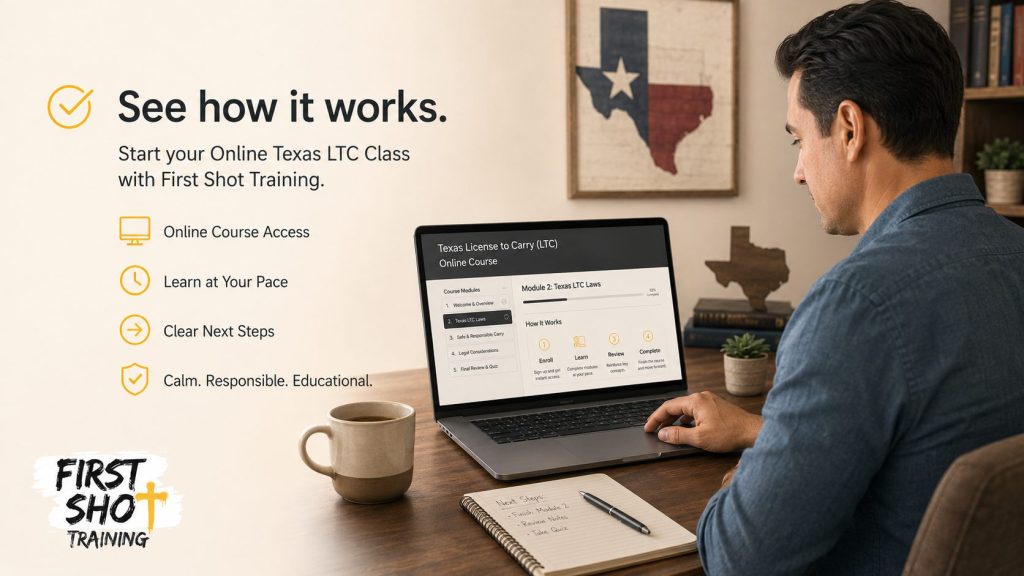
An Online Texas LTC Class lets students complete the classroom portion of Texas License to Carry training from home. For busy adults, that makes the first step easier to understand and easier to schedule.
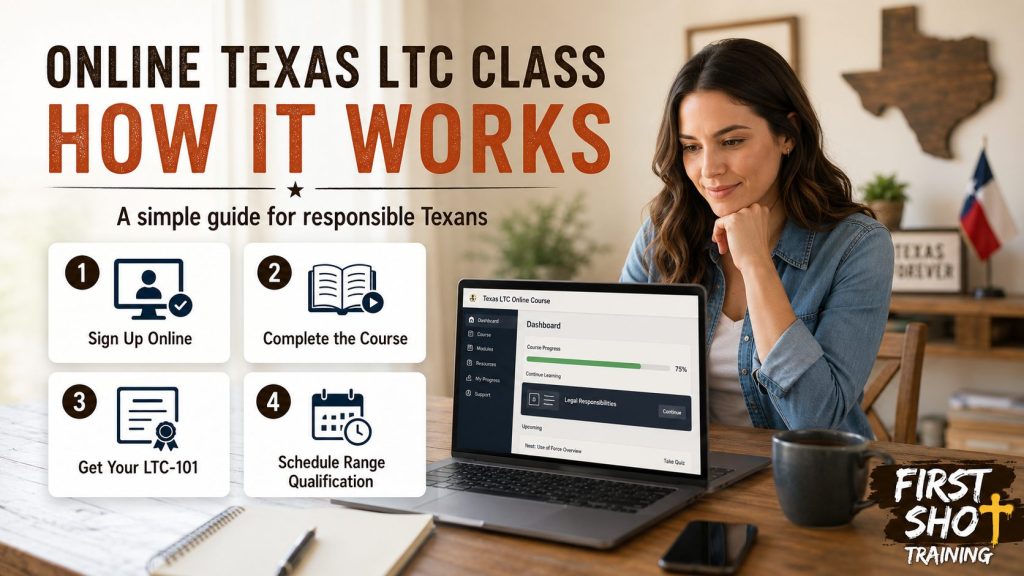
Quick answer: An Online Texas LTC Class covers the classroom topics Texas requires for a License to Carry. You work through the lessons and the written exam online. The provider then issues your course completion documentation. After that you handle the remaining DPS steps, including handgun proficiency with a qualified Texas LTC instructor when required.
What the Online Class Covers
Texas DPS names four classroom topic areas. They are laws that relate to weapons and the use of deadly force, handgun use and safety, nonviolent dispute resolution, and proper storage practices. Each topic is there to help you carry safely and lawfully.
First Shot Training links students to Texas Carry Academy, which identifies itself as a Texas DPS certified online LTC course provider. Texas Carry Academy handles signup, payment, and access to the online classroom portion.
What Happens During the Online Classroom Portion?
Students work through the required classroom material online. A good course explains each idea in plain language, keeps safe handling front and center, and gets students ready for the written exam.
The online format helps students who need flexibility. You can learn at home, at a quiet hour, instead of taking it all in at once in a full classroom.
What Happens After You Finish?
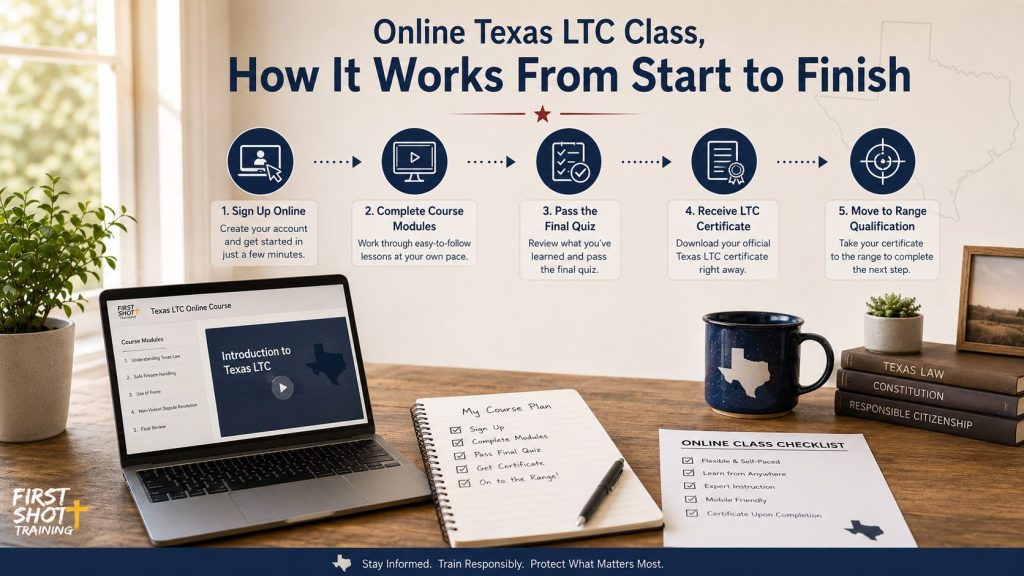
When you pass the online classroom portion, the course provider issues your course completion documentation. Keep it. You will need it for the handgun proficiency step and for what you send to DPS.
The Online Class Is Not the Final Step
The online classroom portion is a big step, but it is not the last one. The DPS application, fingerprints, supporting documents, and range qualification still lie ahead. For the order those steps come in, see how to get your Texas LTC online.
Who Is the Online Texas LTC Class Good For?
The online class suits adults who want a clear and flexible place to start. It helps if you are new to the process, busy with work or family, or you simply learn better at home. If you searched for an Online Texas CHL Class, that is the same class under an older name.
Start your Online Texas LTC Class today.
How to Prepare Before You Start
Set aside quiet time and use a steady internet connection. Take notes on anything you want to go back to. Keep the official DPS pages handy so you can check current application instructions before you send anything in. Still have questions before you sign up? Read the questions students ask before enrolling.
What First Shot Training Does and Does Not Do
First Shot Training does not run the course. It points students to Texas Carry Academy, which handles registration, payment, and course access. First Shot Training explains the steps, answers common questions, and shows what comes after the class. Texas DPS decides who receives a license.
Frequently Asked Questions
Is an Online Texas LTC Class accepted?
Texas DPS allows online classroom training through approved online course providers. Students should verify current requirements and complete any remaining steps required by DPS.
Does the online class include range qualification?
The online class covers the classroom portion. Range instruction and handgun proficiency are separate requirements that are completed with a qualified Texas LTC instructor when required.
How long is the Texas LTC classroom portion?
Texas DPS describes the classroom instruction as a four to six hour course covering required statutory topics.
Can beginners take the Online Texas LTC Class?
Yes, beginner students can start with clear education. Students who are new to firearms should also consider additional hands on safety training.
Disclaimer: The information provided in this article is for general educational and informational purposes only and should not be considered legal advice. First Shot Training is not a law firm and does not provide legal advice. While we make every reasonable effort to ensure the information we publish is accurate and up to date at the time of publication, laws, regulations, licensing requirements, reciprocity agreements, and government policies may change without notice. You are responsible for verifying current information with official government sources before relying on any information contained in this article. If you have questions regarding how the law applies to your specific circumstances, consult a qualified attorney licensed in your jurisdiction.