The written test comes from the required course topics, not from trick questions. This page explains what is on it and what score you need, and where the Online Texas LTC Class fits.
Some links on this page may be affiliate links. First Shot Training may receive compensation when you enroll through those links, at no additional cost to you.
Quick Answer: What Does the Texas LTC Written Test Cover
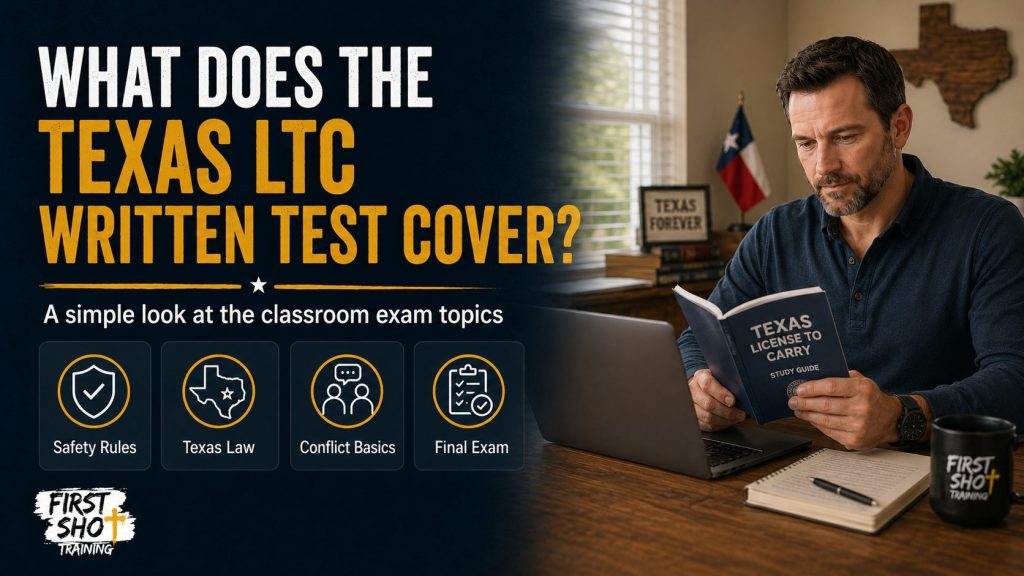
The written test comes from the material taught in the required Texas LTC classroom course. DPS requires the course to cover weapons law and deadly force, handgun use and safety, nonviolent dispute resolution, and proper handgun storage. You need at least 70 percent to pass, and Texas rules allow up to three attempts within a 12 month period. A good course prepares you by teaching the concepts clearly, not by handing you an answer sheet.
Table of Contents
The Test Comes From the Required Course Topics
Texas DPS defines four required classroom topic areas. Those areas create the foundation for the written exam. Students should understand the law-related concepts, safe-handling principles, de-escalation material, and storage responsibilities taught in the class.
What Score Do You Need to Pass?
You need at least 70 percent to pass. Texas rules also allow up to three opportunities to pass within a 12 month period.
Both numbers apply to the written examination and to the proficiency examination, which is the shooting portion. They are set in the DPS rule at Texas Administrative Code, Title 37, Part 1, Chapter 6, Section 6.14.
Knowing the number usually helps. It is a passing standard, not a ranking. Nobody is grading you against the rest of the class.
What if you do not pass the first time? You are not finished. The same rule allows up to three opportunities within a 12 month period. Ask your instructor or your course provider how a retake is scheduled. Review the topic that gave you trouble, then try again.
You Should Not Need a Secret Answer Key
A responsible training provider teaches the content so you can understand it. Looking for exact test questions online misses the point and can leave you with a license-course certificate but weak knowledge.
Law and Use-of-Force Concepts Matter
Expect the class to spend real time on laws relating to weapons and the use of deadly force. The purpose is not to turn students into lawyers. It is to teach the legal framework and responsibilities a license holder needs to understand.
Take the next step: Start your Online Texas LTC Class today with First Shot Training.
Safety and Storage Are Core Topics
Texas requires handgun use and safety content and proper storage practices, with emphasis on preventing accidental injury to a child. Those are practical responsibilities, not filler before the range.
Nonviolent Dispute Resolution Is Required Too
The LTC course is not built around looking for confrontation. Texas specifically requires nonviolent dispute resolution as part of the curriculum. That fits First Shot Training’s approach: responsibility and avoidance come before escalation.
Online Learning Can Reduce Test Anxiety
A self-paced online course lets you absorb the material in a comfortable setting. You do not have to process several hours of information in a crowded room. Focus on learning the concepts. The exam then becomes a natural final step. If the difficulty itself is what is worrying you, here is an honest look at how hard the Texas LTC class really is.
Frequently Asked Questions
What subjects are required in the Texas LTC class?
Weapons law and deadly force, handgun use and safety, nonviolent dispute resolution, and proper handgun storage.
Is the written exam separate from the shooting qualification?
Yes. The classroom exam and the in-person proficiency demonstration are different components.
Should I use online answer dumps?
First Shot Training recommends learning the material through the approved course rather than relying on unverified answer lists.
Can I take the classroom and test online?
The classroom portion can be completed through an approved Online Course Provider.
Is the test the only thing that matters?
No. The goal is responsible understanding of Texas law and safety, not simply passing an exam.
Official Texas Sources
For current, authoritative details, always confirm with the official Texas sources below:
- Texas DPS, Training Requirements FAQ
- Texas DPS Laws and Regulations, linking 37 TAC Part 1 Chapter 6 (Section 6.14 sets the 70 percent pass mark and three attempts)
Disclaimer: The information provided in this article is for general educational and informational purposes only and should not be considered legal advice. First Shot Training is not a law firm and does not provide legal advice. While we make every reasonable effort to ensure the information we publish is accurate and up to date at the time of publication, laws, regulations, licensing requirements, reciprocity agreements, and government policies may change without notice. You are responsible for verifying current information with official government sources before relying on any information contained in this article. If you have questions regarding how the law applies to your specific circumstances, consult a qualified attorney licensed in your jurisdiction.