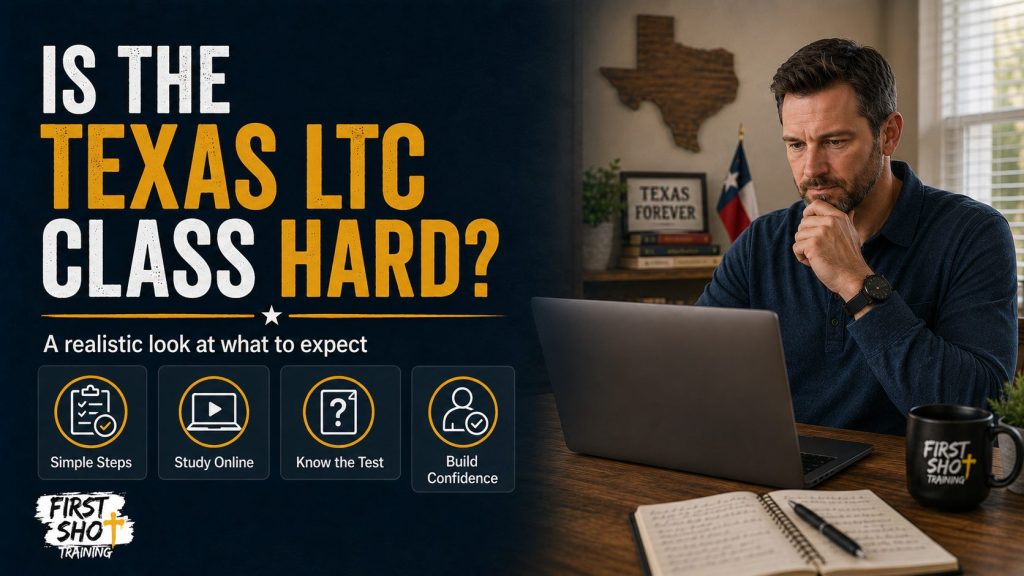
The Texas LTC class is serious, but it is built to be learnable. This page explains what students actually find hard, and where the Online Texas LTC Class fits.
Some links on this page may be affiliate links. First Shot Training may receive compensation when you enroll through those links, at no additional cost to you.
Quick Answer: Is the Texas LTC Class Hard
The Texas LTC class is designed to teach required legal and safety material, not to trick students. The best preparation is to pay attention, take notes, and ask questions when something is unclear. The online format can make the classroom portion feel more manageable because students can learn in a familiar environment instead of a crowded classroom.
Table of Contents
The Class Is Serious, but It Is Learnable
Texas requires real subject matter: weapons law and deadly force, handgun safety, nonviolent dispute resolution, and safe storage. Those topics deserve attention. At the same time, the course is structured for ordinary adults, not law-school students.
Do Not Measure Difficulty by How Fast You Can Click Through
The goal is not to race the clock. Give yourself enough time to understand the material. A student who pauses, takes notes, and reviews a confusing section is using online training exactly the way it should be used.
The Written Portion Comes From What You Are Taught
Students should focus on understanding the course rather than hunting for leaked test answers. A clear approved course prepares you for the test by teaching the concepts first. For the actual subject matter, see what the Texas LTC written test covers.
It also helps to know the bar you have to clear. Texas rules say you need at least 70 percent to pass. That applies to the written examination and to the proficiency examination. Texas rules also allow up to three opportunities to pass each one within a 12 month period.
That is a real standard, and it is not a trick. It is set out in the Texas Administrative Code, Title 37, Part 1, Chapter 6, Section 6.14, the DPS rule on proficiency requirements.
Take the next step: Start your Online Texas LTC Class today with First Shot Training.
The Shooting Portion Is a Separate Concern
Some students say they are worried about the class when they are really nervous about the proficiency demonstration. Those are two different parts of the process. I tell students to separate those two worries, because they have different fixes. If you are not comfortable operating a handgun safely, get hands-on instruction before you schedule the proficiency appointment. If the range day is the part on your mind, read what to do when you are nervous about the Texas LTC shooting test.
Online Training Can Reduce Classroom Anxiety
A self-paced environment can be especially helpful for people who dislike large classrooms, have busy schedules, or need time to process legal material. You can focus on the lesson instead of worrying about keeping up with a room full of strangers.
Responsible Students Usually Do Best
Show up ready to learn. Take the safety material seriously. Treat the course as preparation for a responsibility, not as a hurdle. I have taught this material for more than 25 years, and that mindset matters more than your shooting background.
Frequently Asked Questions
Do I need prior legal knowledge for the Texas LTC class?
No. The required material is taught in the course.
Do I need to be an experienced shooter to take the online class?
No. The online classroom is educational. The proficiency portion is separate.
What if I am nervous about the shooting qualification?
Consider separate hands-on practice or basic pistol instruction before the proficiency appointment.
Is the online class easier than an in-person class?
It covers the required material, but many students find the flexible setting more comfortable.
What is the best way to prepare?
Choose a DPS-approved course, pay attention, take notes, and focus on understanding the material rather than memorizing shortcuts.
Official Texas Sources
For current, authoritative details, always confirm with the official Texas sources below:
- Texas DPS, Training Requirements FAQ
- Texas DPS Laws and Regulations, linking 37 TAC Part 1 Chapter 6 (Section 6.14 sets the 70 percent pass mark and three attempts)
Provider Information
The link below is to the course provider, not to a government agency. First Shot Training may receive compensation if you enroll through it.
Disclaimer: The information provided in this article is for general educational and informational purposes only and should not be considered legal advice. First Shot Training is not a law firm and does not provide legal advice. While we make every reasonable effort to ensure the information we publish is accurate and up to date at the time of publication, laws, regulations, licensing requirements, reciprocity agreements, and government policies may change without notice. You are responsible for verifying current information with official government sources before relying on any information contained in this article. If you have questions regarding how the law applies to your specific circumstances, consult a qualified attorney licensed in your jurisdiction.