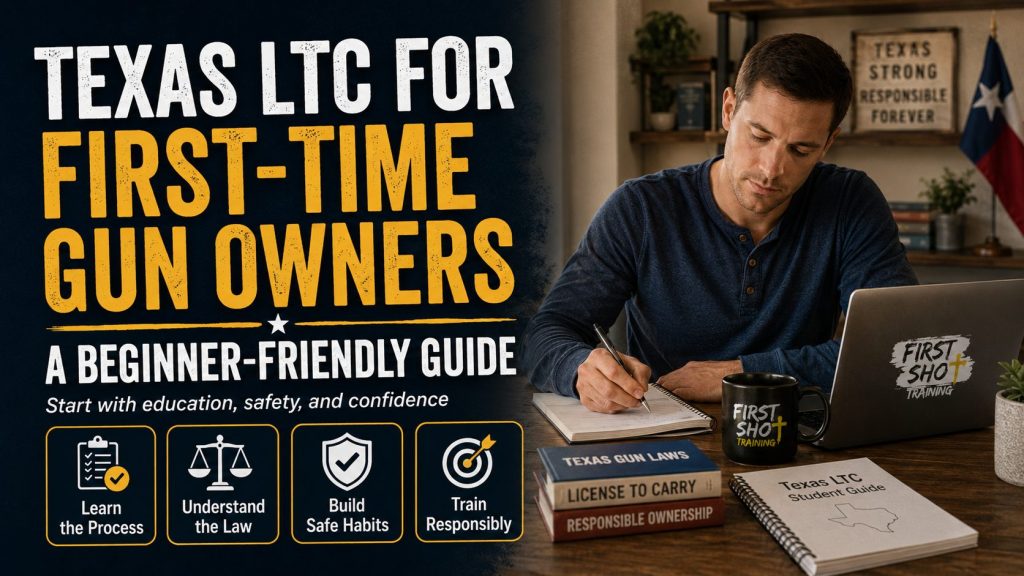
Texas LTC for first time gun owners should feel clear, calm, and beginner friendly. If you are new to firearm ownership or new to the Texas License to Carry process, you do not need pressure. You need responsible education, honest expectations, and a simple path for your next step.
Some links on this page may be affiliate links. First Shot Training may receive compensation when you enroll through those links, at no additional cost to you.
Quick answer: Owning a handgun and carrying one in public are two different things. A Texas License to Carry is about the second one. The class covers safety, legal awareness, storage, and nonviolent dispute resolution. The online classroom portion is a good place to start. Most beginners also want hands on safety training before the range portion.
Table of Contents
Why First Time Gun Owners Should Start With Education
New firearm owners often feel pulled in different directions. Some friends may give advice. Social media may offer strong opinions. Search results may feel overwhelming. The safest place to begin is education. This guide is written for anyone new to handgun ownership. If you want the same material framed for women starting LTC training, or for parents thinking about firearms at home, those are separate reads.
A Texas LTC class gives beginners a structured way to learn. It does not make anyone an expert, and it does not replace continued training. It does give you a responsible place to start.
Texas LTC for First Time Gun Owners Is About Confidence Through Clarity
Start with a distinction that trips up almost every beginner. Owning a handgun and carrying one in public are not the same thing. If you can lawfully own a handgun in Texas, the License to Carry has nothing to do with simply keeping it at home. The license is about carrying, and about the rules that come with carrying.
That split explains the process. Safe handling and storage belong to ownership, and they matter from the day a handgun comes into your home. The law on where you may carry, the signs, the duties, the proficiency demonstration, the application, and the fingerprints all belong to carrying. Beginners tend to study the carrying half hard and skim the ownership half. I would rather see it done the other way around.
What the Online Classroom Portion Helps You Learn
The online classroom portion covers required education connected to the Texas LTC process. Texas DPS describes classroom topics that include laws related to weapons and deadly force, handgun use and safety, nonviolent dispute resolution, and proper storage practices.
Under handgun use and safety you will meet the four rules every beginner learns. Treat every firearm as if it is loaded. Keep the muzzle pointed in a safe direction. Keep your finger off the trigger until you are ready to fire. Know your target and what is beyond it. You learn them in the classroom, then practice them with an instructor at the range. They are not something to try out alone after reading an article. The rest of the material is judgment, and judgment matters more than equipment.
Why Beginners Should Not Rush
No one should feel embarrassed about needing more practice. Everyone starts somewhere. Admit what you do not know and build from there.
If you are brand new, consider adding beginner safety instruction before the range proficiency portion. The LTC process includes handgun proficiency, but a beginner may need more instruction than the minimum requirement provides.
Safe Storage Matters From the Beginning
Safe storage is one of the most important responsibilities for any firearm owner, especially in homes with children, visitors, roommates, or family members. A responsible owner thinks about access, storage, transport, and daily habits before problems occur.
Your plan should match your home, your responsibilities, and current law. If you have legal questions about storage obligations, verify official sources or speak with qualified legal counsel.
The Online Class Can Help You Start From Home
For many beginners, starting online feels less intimidating. You work through the classroom material in private. You can stop and take notes when the provider allows it. You can read your next steps without anyone watching the clock.
Begin your Texas LTC training online and take the first step with First Shot Training.
What Comes After the Online Class?
After the online classroom portion, students generally receive documentation from the provider and continue with remaining requirements. This may include handgun proficiency with a qualified Texas LTC instructor when required, DPS application steps, fingerprints, and supporting documents.
First time students should keep all documents organized and confirm range requirements before arriving.
What Should Beginners Ask Before Range Qualification?
Ask the instructor what to bring before you go. Ask about safety gear, handgun and ammunition requirements, and fees. Ask what the range rules are and what time to arrive. Many beginners also ask whether they need to own a handgun first. Here is the answer for the class and for the range.
If you are nervous, tell the instructor you are new. A responsible instructor wants students to be safe and honest about their experience.
Common Beginner Mistakes to Avoid
Two mistakes come up more than any others. The first is treating one class as the whole of your firearms education. It is a start, not a finish. The second is putting off a storage plan until after the handgun is already in the house. Decide where it will live before you bring it home. And there is no such thing as a question too basic to ask an instructor.
The best beginner is not the person who pretends to know everything. The best beginner is the person who takes responsibility seriously.
Continuing Education After Your LTC Class
The LTC class is a beginning, not an ending. Keep going with safety training, range practice under qualified instruction, storage habits, basic maintenance, and legal awareness.
Responsible ownership grows over time.
A Simple Beginner Path
Start with education. Review eligibility. Complete the online classroom portion. Prepare for proficiency with humility and care. Follow DPS instructions. Keep learning after the class.
That path is simple, but it is meaningful.
Frequently Asked Questions
Is the Texas LTC class good for first time gun owners?
Yes, the classroom portion can help first time gun owners understand important safety, legal awareness, dispute resolution, and storage topics.
Should beginners get extra training?
Many beginners benefit from additional hands on safety and fundamentals training before range proficiency.
Can I take the classroom portion online?
Yes, the classroom portion may be completed online through an approved online course provider.
Does an LTC class make me fully trained?
No. The class is an important educational step, but responsible ownership requires continued learning and practice.
What should I focus on first?
Start with safe handling and storage, because those apply the moment you own a handgun. Legal awareness about carrying comes next, along with a realistic view of the full Texas LTC process.
Disclaimer: The information provided in this article is for general educational and informational purposes only and should not be considered legal advice. First Shot Training is not a law firm and does not provide legal advice. While we make every reasonable effort to ensure the information we publish is accurate and up to date at the time of publication, laws, regulations, licensing requirements, reciprocity agreements, and government policies may change without notice. You are responsible for verifying current information with official government sources before relying on any information contained in this article. If you have questions regarding how the law applies to your specific circumstances, consult a qualified attorney licensed in your jurisdiction.