If you are searching for do you have to be a Texas resident to get a Texas LTC, the goal is usually not to read ten conflicting forum threads. You want a clear answer, the current Texas process, and a practical next step. This guide explains the issue in plain English and shows how the Online Texas LTC Class fits into the licensing process.
Some links on this page may be affiliate links. First Shot Training may receive compensation when you enroll through those links, at no additional cost to you.
Quick Answer: Do You Have to Be a Texas Resident to Get a Texas LTC
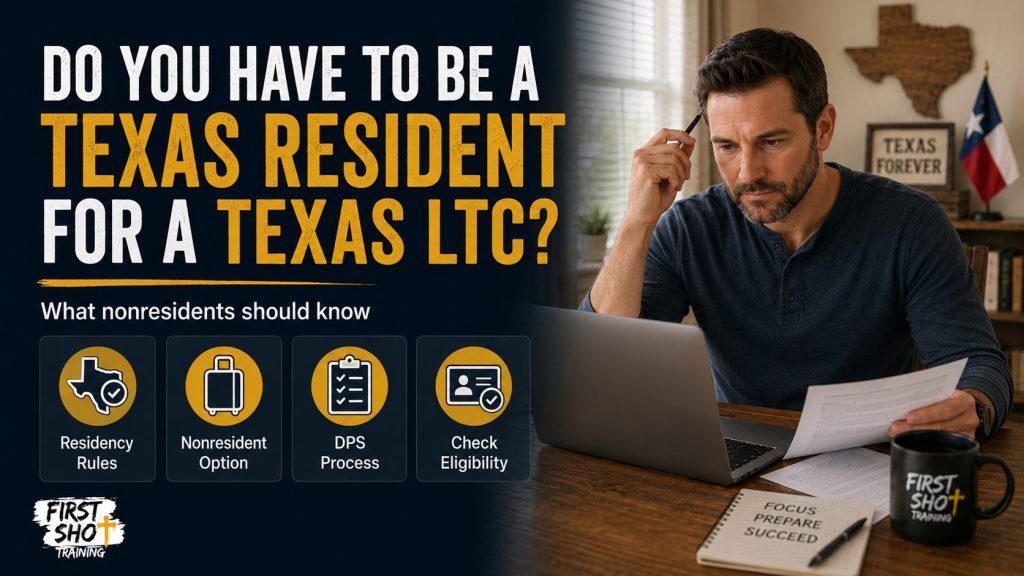
No. Texas DPS states that legal residents of another state, as well as people relocating to Texas with the intent to establish residency, may apply for a Texas License to Carry if they meet the other eligibility requirements. Nonresident applicants have additional documentation requirements, so the cleanest approach is to review the current DPS checklist before submitting the application.
Ready to get started? Start your Online Texas LTC Class today with First Shot Training.
Table of Contents
Texas Does Issue Licenses to Nonresidents
Texas Government Code provides a path for nonresident applicants, and the DPS application FAQ specifically says you do not have to be a Texas resident to obtain an LTC. That makes the Texas license relevant to people who travel to Texas, military families, people preparing to move here, and other eligible residents of another state.
Nonresident does not mean no paperwork. DPS says applicants without a Texas driver license or ID may need additional identification materials, including the LTC-6 photo holder, passport-style photos, and a copy of the out-of-state driver license or state-issued identification.
The Online Class Can Still Be a Convenient First Step
A nonresident applicant can use the online classroom option through an approved Texas Online Course Provider. The online course lets you complete the classroom education without sitting in a Texas classroom for four to six hours.
The in-person portion is different. Current Texas LTC instructor guidance treats required in-person LTC training and the proficiency demonstration as Texas-based. A nonresident should plan ahead for the in-person portion and verify current DPS instructions before traveling.
Take the next step: Start your Online Texas LTC Class today with First Shot Training.
What Nonresident Applicants Should Prepare
Start with a valid identification document from your state of residence and review DPS’s current nonresident documentation requirements. Make sure your legal name, address, and identifying information match the documents you will submit.
If you are relocating to Texas, do not assume you must wait for a Texas driver license before learning about the process. DPS specifically recognizes people relocating to Texas with the intent to establish residency. Your exact documentation depends on your situation.
Residency Is Only One Part of Eligibility
A nonresident applicant must still satisfy the same core eligibility rules that apply to the Texas LTC program. DPS reviews criminal history and other eligibility factors and may request supporting documents.
If you are unsure whether an arrest, conviction, protective order, immigration status, or other issue affects you, read the current DPS eligibility material or speak with a qualified attorney before relying on a general blog article.
Why Nonresidents Often Start With the Online Class
The online class is the portion you can control from your own schedule. It gives you the required education and helps you understand the licensing process before you arrange a Texas trip for any in-person requirement.
For someone who already knows they want a Texas LTC, taking the classroom portion online can reduce what must be accomplished during a visit to Texas.
Why This Question Matters Before You Enroll
People usually search for do you have to be a Texas resident to get a Texas LTC because one unanswered detail is keeping them from moving forward. That is exactly the kind of question worth answering before you spend time on the rest of the process. The goal is not to pressure someone into a class that does not fit. The goal is to make the process clear enough that an eligible student can make a confident decision.
For most students who have already decided they want a Texas LTC, the online classroom portion is the easiest part to start. It removes a scheduling barrier while still requiring the same serious attention to Texas law, handgun safety, nonviolent dispute resolution, and safe storage.
What to Verify Before You Enroll
Before you submit a nonresident application, compare your current identification and residency status with the Texas DPS nonresident instructions. Applicants without Texas identification have additional documentation requirements, and the exact paperwork matters. If you are in the middle of a move, use the status and documents that are accurate when you apply rather than guessing what DPS will want later.
A good rule is simple: use First Shot Training and other educational resources to understand the process, then use Texas DPS as the authority for current licensing requirements. That keeps convenience and accuracy working together.
Common Mistakes to Avoid
- Assuming a Texas driver license is always required before beginning the LTC process.
- Forgetting the additional nonresident photo and identification paperwork.
- Assuming the entire first-time LTC process can be completed outside Texas.
- Waiting to start the online classroom solely because a Texas trip is not scheduled yet.
- Relying on another person’s old nonresident checklist instead of current DPS instructions.
Most delays and confusion come from mixing up separate parts of the process or relying on stale information. Keep your documents organized, use current official sources, and complete one requirement at a time.
A Practical Next-Step Checklist
- Read the quick answer in this guide and decide whether the Texas LTC still fits your goal.
- Review the current Texas DPS page linked in this article for any rule that applies specifically to your situation.
- Start the approved online classroom portion when you are ready to complete the education requirement.
- Plan the proficiency, application, fingerprinting, and supporting-document steps that apply to you.
- Keep copies of training and application records until the license process is complete.
This approach is intentionally simple. You do not need to memorize every DPS page before you start the class, but you should understand which parts of the process are training, which are state administration, and which depend on your individual eligibility.
Why First Shot Training Starts With Education
First Shot Training’s primary recommendation is to begin with education because the LTC class has value beyond checking a box. The course introduces the legal framework, safe-handling responsibilities, conflict-avoidance concepts, and storage expectations that go with carrying a handgun responsibly.
The online format makes that education easier to schedule, but it does not make the responsibility smaller. An eligible student can learn from home, then move through the remaining Texas requirements with a clearer understanding of what the license means and what it does not mean.
How the Online Texas LTC Class Fits Into This
The online classroom option is designed to make the education requirement easier to fit into real life without watering down the responsibility that comes with the license. Texas DPS allows the classroom portion through an Approved Online Course Provider. First Shot Training connects students to an approved provider so they can complete that classroom requirement on a flexible schedule.
The online class is not a shortcut around Texas requirements. It is a convenient way to complete the education portion. Most first-time applicants still need to complete the applicable proficiency requirement, DPS application, fingerprinting, and supporting-document steps. Texas DPS makes the final decision on licensing eligibility.
Helpful First Shot Training Resources
Start with the Online Texas LTC Class page.
See how the Texas LTC process works from start to finish.
Read the Texas LTC and CHL FAQ.
Review our guide to getting your Texas License to Carry online.
Learn how the Online Texas LTC Class works from start to finish.
Frequently Asked Questions
Can someone who lives in another state get a Texas LTC?
Yes. Texas DPS states that legal residents of another state may apply if they meet the other requirements.
Do I need a Texas driver license?
Not necessarily. DPS provides additional documentation procedures for applicants who do not have a Texas driver license or ID.
Can I take the online class while I am outside Texas?
Online course providers can offer the classroom portion remotely. Plan to verify the current location requirements for any in-person proficiency training.
Do nonresidents have different eligibility rules?
They must meet the Texas LTC eligibility requirements and also provide the additional documentation DPS requires for nonresident identification.
Can I start before I move to Texas?
Potentially, yes. DPS specifically addresses legal residents of another state and people relocating to Texas with the intent to establish residency.
Official Texas Sources
For current, authoritative details, always confirm with the official Texas sources below:
- Texas DPS: https://www.dps.texas.gov/section/handgun-licensing/faq/application-faqs
- Texas DPS: https://www.dps.texas.gov/section/handgun-licensing/ltc-fingerprint-and-photo-information
- Texas DPS: https://www.dps.texas.gov/section/handgun-licensing/faq/training-requirements-faq
Disclaimer: The information provided in this article is for general educational and informational purposes only and should not be considered legal advice. First Shot Training is not a law firm and does not provide legal advice. While we make every reasonable effort to ensure the information we publish is accurate and up to date at the time of publication, laws, regulations, licensing requirements, reciprocity agreements, and government policies may change without notice. You are responsible for verifying current information with official government sources before relying on any information contained in this article. If you have questions regarding how the law applies to your specific circumstances, consult a qualified attorney licensed in your jurisdiction.